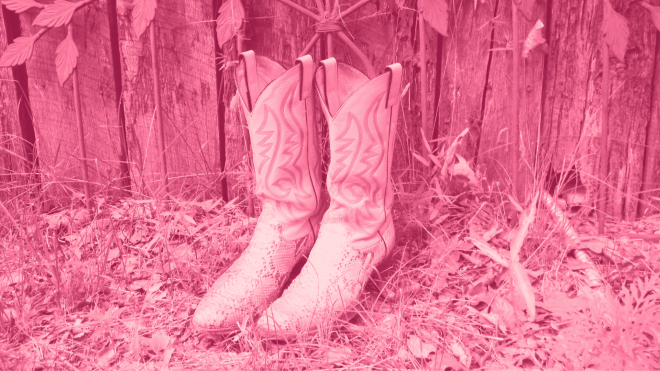
“When we start to value our life in terms of what we might accomplish, or how other people think about us, we can lose sight of the core values that anchor us to all that is holy and life-giving. It turns out that those who leave the best legacies are those who weren’t too worried about what legacy they might leave behind.”
Sermon Preached: Sunday, August 30, 2026 at Trinity on the Green
Proper 17a: Jeremiah 15:15-21 | Psalm 26:1-8 | Romans 12:9-21 | Matthew 16:21-28
May I speak in the name of God, who is to us Father, Son, and Holy Spirit. Amen.
Some of you may be familiar with those tall glass prayer candles with images of Jesus, Mary, or the saints on them. In the Mexican tradition they are known as veladoras, or velas, and they feature images of all kinds of saints, traditional and otherwise. I have owned two of these veladoras in my life. One of them showed the image of my cat Violet dressed in robes like the Virgin Mary– that one was a joke gift from my sister, and it certainly depicts the grace and dignity embodied by my siamese cat, Violet. The second veladora was also non-traditional, although I think this candle embodies our ideas of sainthood more seriously. This candle featured an image of Dolly Parton, the beloved Country singer and philanthropist who passed on to eternal life earlier this week.
Sitting on the couch on Wednesday night, my spouse Will talked about what Dolly’s legacy meant to him, especially as a person born in Appalachia. Will asked me who was preaching on Sunday and I groaned, sensing an assignment. I didn’t want to preach on Dolly Parton– in the same way that I don’t like to preach on those Gospel passages that are the “greatest hits” of our tradition. What more can I say about the Great Commandment, to love our neighbors as ourselves? What more can I say about the Beatitudes in Matthew? There are these passages that seem to preach for themselves. In a similar way, what more can I say about Dolly Parton? Her life speaks for itself– a testament to what it looks like to love as Jesus loved, to forgive as Jesus forgave, to stand alongside others as Jesus stands with us.
For those who might not be very familiar with the life of Dolly Parton, let me fill in some gaps– including some things that I only learned about Dolly Parton this week. Dolly was born on January 19, 1946, in a one room cabin on the banks of the Little Pigeon River in rural Tennessee. She was the fourth of twelve children, the granddaughter of a Pentecostal preacher, and a daughter of Appalachia. Parton brought her roots in Smoky Mountain folklore and ballads to Nashville, where she performed at the Grand Ole Opry at the young age of 13, meeting Johnny Cash who introduced her as “a little girl here from up in East Tennessee.”
Much of Parton’s early work was collaborative, working for a long time alongside country show host and musician Porter Wagoner. When that collaboration had run its course, tension was in the air. Parton remembers thinking of potential lawsuits and going home and deciding to simply do what she does best– write a song. She went back the next day to sing her song to Wagoner, a song called “I Will Always Love You.” Not only did that song speak perfectly to the arc of their relationship, healing wounds in the process, it also became Parton’s biggest hit throughout her career– and was famously covered by Whitney Houston years later.
Even as Dolly Parton set out on her solo career, partnership and collaboration was always central to who she was. Throughout her career she lifted up the work of other artists, collaborating with Emmylou Harris, Linda Ronstadt, Kenny Rogers, Miley Cyrus, Beyonce, and countless others. As the documentary filmmaker Ken Burns put it, “she didn’t see any them out there, she only saw us.” This sense of deep connection was mirrored in her philanthropic work. Parton founded the Dollywood Foundation, funding an educational program in her homeplace of Sevier County, TN, which dramatically increased the rates of children staying in school. She also created the Imagination Library with a wider geographic reach, donating over 300 million books to children around the world from birth to five. Dolly’s public graces are hard to list in full. She worked to raise money for the American Red Cross and HIV/AIDS related charities; she was a generous ally to the LGBTQ community; she funded medical research– including providing seed money that helped create some of the first medical responses to COVID-19.
There are so many stories about Dolly Parton’s generosity that can’t be captured in a headline. Another fellow Appalachian, Trinity’s former Music Director Walden Moore, shared a story with me this week about how Dolly Parton personally funded the education of the late organist Harry Huff, first at North Carolina School of the Arts and later at Yale University. Harry was born in Sevierville, TN– and Dolly quietly promised to cover the full cost of a university education for anyone from her hometown who wished to attend. What extraordinary generosity, anchored in individual acts of care and kindness.
Throughout her life, Dolly talked about her faith– she described waking up every day to pray, focusing her prayers on gratitude, and she shared a hope that others would be able to find their own path, saying “everybody’s got to have something to believe in” (Greg Garrison, “Dolly Parton taught a veteran reporter about faith”).
Dolly Parton leaves behind an incredible legacy– one that might make you think of your own life, and the legacy that you want to leave behind. But that, I think, would be a mistake. Not because of Dolly Parton (there’s no mistake in admiring and being inspired by her life). But I sometimes think that we stumble when we get too caught up in the idea of a legacy. When we start to wonder what legacy we will leave behind one day, our minds can stray too much to the future, instead of living in the present. When we start to value our life in terms of what we might accomplish, or how other people think about us, we can lose sight of the core values that anchor us to all that is holy and life-giving. It turns out that those who leave the best legacies are those who weren’t too worried about what legacy they might leave behind. They are simply living– living according to what they know to be good and true.
I invite you to turn toward our Gospel passage for today. In today’s Gospel Jesus tells his disciples, “If any want to become my followers, let them deny themselves and take up their cross and follow me. For those who want to save their life will lose it, and those who lose their life for my sake will find it.” There are all kinds of ways that we try to find our lives, and perhaps finding our legacy is one of them. But it’s only by losing ourselves that we can find the heart of who we are as children of God. It’s only when we disconnect ourselves from the fear of being forgotten that we can truly, deeply live. So do what you can to let go of that fear; let go of the list in your head of things you have done and left undone, at least in terms of legacy. And find your life in Christ in the everyday moments, in the subtle choices that no one will ever see or write down. Lose your life, so that you can find it. Find that abundant life where you are deeply connected to others; that abundant life where there is no them, only us. Us, the children of God. Us, the body of Christ. Us.
I believe that Dolly Parton lived without fear of what her legacy would be– and that kind of faith is what set her free. She took up her cross– that burden of self-sacrificial love– and followed Jesus in her own way. I pray that we will do the same, not comparing our cross with others, but trying to understand more clearly the weight and feel of the lives that God has given us to live. For those who want to save their life will lose it, and those who lose their life for the sake of Christ will find it.
Don’t worry about the end. Life is what happens in the meantime.
And that takes us back to Dolly, whose 2011 song In the Meantime remains with us as a statement of faith. Here are some of the words from that song:
You know people been talking about the end of time ever since time began
We’ve been living in the last days ever since the first day ever since the dawn of Man
Well nobody knows when the end is coming but some people tell you they do
Well it might be today, it might be tomorrow, or in a million years or two
In the meantime, in between time, let us make time to make it right
And let us not fear what is not clear, faith should be your guide, just follow this advice
And
Think about love, think about living
Think about love, sharing and giving
Drop the Doomsday attitude and let the spirit flow
These are wonderful times we’re living in
God still walks in the hearts of Men
And Eden’s garden waves within so let the flowers grow.
Amen.
Works Referenced:
Garrison, Greg. “Dolly Parton taught a veteran reporter about faith and why she ‘always loved Alabama.’” Al.com (25 Aug. 2026). https://www.al.com/news/2026/08/dolly-parton-taught-a-veteran-reporter-about-faith-and-why-she-always-loved-alabama.html (accessed 27 Aug 2026).
“Legendary filmmaker Ken Burns gives Touching tribute to Dolly Parton.” With Alicia Menendez. MS Now (25 Aug 2026). https://youtu.be/KmBVLA4t-eg (accessed 27 Aug 2026).

