Sermon Preached: Sunday, March 8, 2026 at Trinity on the Green
Lent 3 (Year A): Exodus 17:1-7 | Romans 5:1-11 | John 4:5-42 | Psalm 95
Between the words that I speak, and the words that are heard, may God’s Spirit be present. Amen.
We are born thirsty.
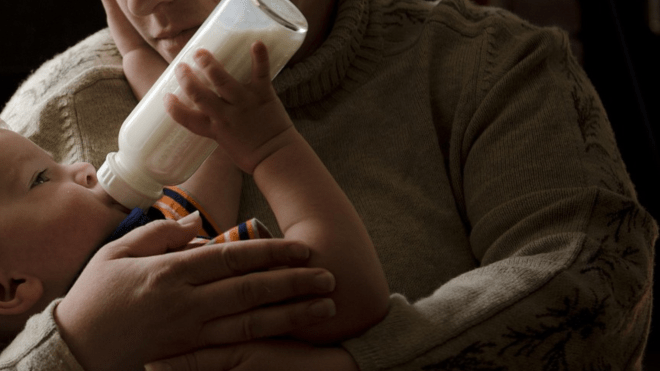
As a mother, I have had the privilege of being with two human beings, my daughters, in the first hour after their birth. That hour is different for each and every person, just as their birth stories are different. But two things stand out to me about that hour. First, the gasp of breath that comes as a cry. And second, the undeniable thirst as a newborn roots around on their mother’s body for milk. After months in a womb, babies somehow instinctively know that they need something now; something outside of themselves; something to quench their thirst.
Breast milk is probably the closest real-world comparison to the living water that Jesus speaks about, in today’s Gospel passage. Breast milk is constantly changing, based on a baby’s developmental needs and the time of day. When a baby is sick, a mother’s milk adjusts to provide more antibodies. At the end of the day, a mother’s milk contains higher levels of protein that make it easier for a baby to fall asleep (God willing). As a mother who is still breastfeeding her child, I am filled with wonder when I think about the ways that our bodies are made to nurture one another. And, as a mother who had numerous feeding issues with my first daughter, I am also in awe about the care, concern, and fierce love that goes into feeding a baby formula, when that living water isn’t always an option. However our babies are fed, it is an act of great love– because all of us share this in common: we are born thirsty.
Jesus was born thirsty too. In that humble place in Bethlehem, one of the first things Jesus would have done as an infant was to root around on his mother Mary’s chest, searching for milk. As we know from our own lived experience, thirst comes and goes. For babies it comes and goes frequently, as parents wake at all hours of the night to feed them. Gradually our thirst stretches for longer periods of time. But at every phase of our lives, we still thirst.
Jesus is thirsty at the beginning of today’s Gospel passage, when he arrives in the Samaritan city called Sychar and asks for a drink of water. The Samaritan woman near the well is surprised that Jesus would ask her for help, since Jews and Samaritans did not share things in common at that time, and at that place. Nevertheless, Jesus is unbothered by those invisible lines of custom and culture, lines that he crosses throughout his ministry. He goes on to have a conversation with her that shows just how much he respects her dignity, treating her as a worthy and interesting conversation partner on a theological topic– the topic of living water.
“Sir, you have no bucket, and the well is deep,” the woman observes. “Where do you get that living water? Are you greater than our ancestor Jacob, who gave us the well, and with his sons and his flocks drank from it?”
Jesus replies: “Everyone who drinks of this water will be thirsty again, but those who drink of the water that I give them will never be thirsty. The water that I will give will become in them a spring of water gushing up to eternal life.”
We are born thirsty. And in this passage, Jesus acknowledges that the thirst we have in us goes beyond our physical thirst for milk, water, gatorade, Coke Zero– whatever it is that you like to drink. Beyond all of those things, each of us is born with a spiritual thirst. We are born with a thirst for meaning. We are born with a thirst for connection– to God our creator, and to one another.
The Psalmist describes this thirst beautifully, in these words from Psalm 42:
As the deer longs for the water-brooks, *
so longs my soul for you, O God.
My soul is athirst for God, athirst for the living God; *
when shall I come to appear before the presence of God?
My tears have been my food day and night, *
while all day long they say to me,
“Where now is your God?”
I pour out my soul when I think on these things; *
how I went with the multitude and led them into the
house of God,
With the voice of praise and thanksgiving, *
among those who keep holy-day.
Why are you so full of heaviness, O my soul? *
and why are you so disquieted within me?
Put your trust in God; *
for I will yet give thanks to him,
who is the help of my countenance, and my God.
This Psalm is full of emotion. It touches on the joy that the Psalmist felt, when going to worship God at the temple. And it touches on the desperation of those moments when God feels far away, a desperation that is all the more painful because of those memories of joy and thanksgiving. The Psalmist remembers times when it felt like tears were his only food– a far cry from living water. Indeed, this is the same Psalm that includes those words that Jesus later speaks to God from the cross: “Why have you forsaken me?”
Jesus knew thirst: not only the thirst of our bodies, but the thirst of our souls. Jesus knew thirst for water, when he was nailed to the cross and offered only vinegar to drink. Jesus knew thirst for compassion, for truth, for justice– thirst for the kingdom of heaven that he came to proclaim. Jesus knew thirst for God, the father of us all. He knew that thirst like a child longing for his parent; like a baby longing for his mother and the living water she can give.
We know thirst too. We thirst for a world without war, so that children everywhere might live and grow in the grace and stature of God. We thirst for truth, truth that will cut through confusion in our personal lives and in the political life of our country. We thirst for love, that perfect love that casts out hate and fear. We thirst for living water.
My prayer to God today mirrors the words of the Samaritan woman: “Sir, give me this water, so that I may never be thirsty or have to keep coming here to draw water.” God, give us that living water.
I believe that our faith in Jesus Christ can help us cultivate a living spring in each of our souls, a spring that we can return to again and again to quench our thirst. But if that water isn’t always forthcoming, be patient. Trust in God. Whenever we draw near to the well of holiness, to the well of God, I try to remind myself that we have tools to help us draw that water. God gave us a bucket. Our prayers, our liturgies, our traditions– these are our bucket. These are the tools that we can use to contain our longing; to give shape and space for living water. And if our traditions are the bucket, then Jesus is the line tied to that bucket as we lower it into the well. Jesus is the point of connection, the line that bridges our humanity and God’s divinity. The well is deep– but with Jesus we can stretch across that distance. Through Jesus we can know God, just as we have been fully known by him.
We are born thirsty.
If your soul is thirsting today, know that you are not alone. We come to the well together. We come with the same thirst that Jesus himself had, when he lived among us. We come with the thirst that God still shares for a world that is more just, more loving, more kind. If you have found any living water in your life, share that living water with someone else today. And if your thirst is overwhelming in this moment, don’t hesitate to reach out– to ask for a drink of water, just as Jesus himself did.
We are born hungry because we know, instinctively, that there is something out there that can feed our thirst. God, give us that living water. Amen.
 Ichtheology