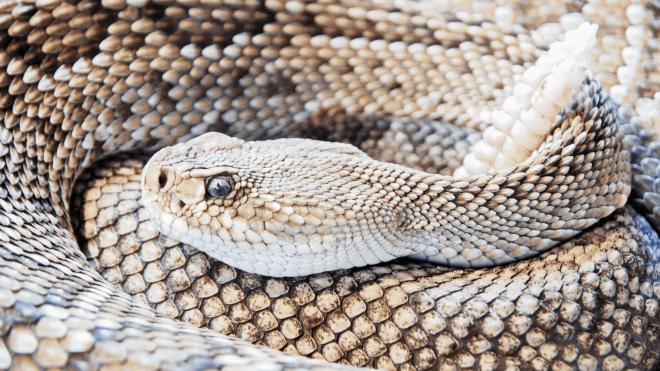
“Remember the image of that snake, held high in the wilderness as a sign of healing. Think about the ways you can lift high your sin: to acknowledge it, notice the ways you fall into old patterns, and begin to move into healing…. In order to be healed, we have to face the source of our suffering.”
Sermon Preached: Sunday, March 10, 2024 at Trinity on the Green
Lent 4, Year B: Numbers 21:4-9 | Ephesians 2:1-10 | John 3:14-21
May I speak in the name of God, who is to us Father, Son, and Holy Spirit. Amen.
In our reading from the Hebrew Scriptures this morning, God prescribes a strange remedy to heal the Israelites from the most recent calamity to befall them. After being delivered out of slavery in Egypt, the Israelites are wandering in the desert for what will eventually become forty years. During this time of wandering the Israelites go through cycles of complaining. There isn’t enough to eat; there isn’t enough to drink; they opine that even slavery in Egypt would be better than this wilderness. As a result of their complaining, the scriptures say that the Lord sent poisonous snakes among the people of Israel, and many of them died. But it turns out that God has not abandoned them completely (as God promised the Israelites all along). As a cure to this plague of snakes, God instructs Moses to craft the image of a serpent and put it on a pole. Whenever a person is bitten they are instructed to look at the pole with the serpent, and through that action they will be healed.
This is a strange story. It is so strange that, as we were preparing for our family Eucharist that will take place later today at the 10:30am service, it was initially decided that maybe we shouldn’t include the creepy story with the poisonous snakes. I begged to differ— because I do think snakes are actually pretty interesting, in the eyes of an eight year old, and because we all have to come to terms with the fact that lots of things that happen in our scriptures are profoundly strange, and sometimes unsettling. Nevertheless, the bulletins had already been printed before I made this suggestion— and since I missed out on preaching about snakes to kids later today, I decided I would make up for it by preaching a sermon about snakes to all of you at the 7:45am service. So: here goes.
What can we learn about the story of Moses lifting up the snake in the wilderness? There are two points I’d like to explore in greater detail today, and the first one is this: (1) in order to be healed, we have to face the source of our suffering.
This is, after all, what the Israelites had to do in a symbolic way when they were told to look at the snake on a pole, as a cure to their venomous snake bites. I imagine that, if I had been bitten by a snake, the very last thing I would want to do is look at more images of snakes. These snakes had been terrorizing the encampment of the Israelites. Imagine finding snakes in cooking pots; uncovering snakes beneath a blanket in the place where you slept. It may have gotten to the point where people should see a branch or a piece of rope out of the corner of their eye, and think it was a snake. It seems like an act of divine comedy that the cure God prescribes is to lift up an effigy of a snake, high above the crowd, so that everyone can see it. This is a symbolic reminder to each of us that healing can only come when we can acknowledge the source of our hurt and hold it high, staring it in the face and even, perhaps, letting our struggles be known by others. We cannot be healed until we acknowledge the source of our pain.
As we Christians, we call the source of our pain sin. Sin can be a scary word, full of evangelical fervor or Catholic baggage. And yet there are many helpful ways of thinking about sin that don’t fall into the category of shame, blame, or human depravity. For example, some people think of an as “missing the mark,” which is a literal translation of the Greek word for sin, ἁμαρτία. In this understanding, sin is not written on a tablet in stone. Instead, there is a recognition of an ideal point, a fixed bullseye of being and behavior, that we strive towards. Sometimes we miss that mark by a little; sometimes we miss it by a lot. In any case the recognition of sin helps us to admit that we can do better. It helps us reflect on that bullseye of better living which is, in our Christian faith, the way of love embodied in Jesus Christ.
Another helpful way of thinking about sin comes from the Episcopal catechism, printed in the back of the Book of Common Prayer. The BCP, as we so often call it, defines sin in this way: “Sin is the seeking of our own will instead of the will of God, thus distorting our relationship with God, with other people, and with all creation.” This understanding of sin focuses on relationships, as a way of identifying sin in our lives. The things that hinder our relationship with God, other people, and all creation can be identified as sin. Rather than living a life of fractured relationships and isolation, we can turn away from our sins and be reconciled to God and our neighbors.
I hope these framings of our Christian understanding of sin will help you with this next prompt. I’d like to invite you this morning to think about a particular sin that is holding you back. Where have you missed the mark? What attitudes or behaviors have made you feel distant from God and others? Now remember the image of that snake, held high in the wilderness as a sign of healing. Think about the ways you can lift high your sin: to acknowledge it, notice the ways you fall into old patterns, and begin to move into healing. Healing can take the form of prayer. It can take the form of the collective confession that we say in the liturgy. Or it can simply be a sense that God is with you, clearing away the clouds and making room for the sun to shine. In order to be healed, we have to face the source of our suffering. But there is freedom in Christ on the other side of our sin. There is freedom to be the person God longs for you to be – whole, loving, and fully alive.
The second point I’d like to explore today is this: (2) sin is not just a matter of individual behavior; as human beings we are also burdened by collective sin— what is sometimes called “corporate” or “systemic” sin.
This idea of collective sin was something I had never heard of until I got to seminary. As a young adult growing up in the evangelical tradition, I assumed sins were individual. Individuals made choices, I thought, and we could choose to sin or we could choose to follow Jesus. Now I do think it is important to address sin on an individual level— and I hope we have done that somewhat already, as I invited you to reflect on the image of the snake lifted up in the wilderness. But there are also bad things that happen in the world, that are not the result of any individual choice or action. Think of poverty. Think of environmental degradation. Think of racism, and the ways that we are involved in systems that discriminate against people with darker skin tone, even if we individually have the best intentions to honor the dignity of every human being. These are examples of what collective sin looks like.
When we consider the story of the Israelites in the desert, we can see that collective sin is nothing new. Collective sin is not the invention of 20th century liberals or theologians. It has been with us since the patriarchs and matriarchs walked the desert. The collective sin that the Israelite, as a people, are responsible for is the sin of impatience. It is a sin of not trusting God, but instead letting their own worries and anxieties consume them. We can imagine how this works— one person grumbles about the lack of food and water, and soon everyone is complaining. Perhaps there was some truth in the original complaint, but that is not the point. An attitude of bitterness and impatience has spread throughout the community, and soon the complaint is no longer just about food and water: it is about complaining for the sake of complaining. It is about complaining as a coping mechanism for a situation in which the Israelites feel powerless.
This is how collective sin works. It’s like an avalanche barrelling downhill, gaining mass and speed, and it’s impossible to say what set it off in the first place. But there is good news, in the midst of this acknowledgment of collective sin. While the sin may be collective, so is the healing. The Israelites do not go into a tent to view the snake in secret. Instead the snake is lifted up in the midst of the camp. The community is there to support one another in their collective healing.
I don’t think it is hard to name collective sin in our society today. I do think it is very difficult to know what to do about it. It can be easy to feel powerless, in the face of forces that feel so much bigger than ourselves. But if we remember that healing, too, is collective, we can start by talking with one another about the collective hurts we see in the world. We can start by building a network that reminds us we are always part of something bigger than ourselves. We are part of a “network of mutuality,” as Dr. Martin Luther King called it. We are part of what Christians call the body of Christ. This acknowledgement of our interconnectedness is a key step towards healing.
I’ve been talking about snakes so long that I almost forgot to shift to our Gospel lesson for today, which— spoiler alert!— also involves snakes. In the Gospel or John, Jesus says, “Just as Moses lifted up the serpent in the wilderness, so must the Son of Man be lifted up, that whoever believes in him may have eternal life.” As strange as the story with Moses and the snakes is, Jesus thought it was important enough to return to, as he foretold his journey to the cross, which is the crux of our salvation.
Jesus’ salvation works much in the same way as the snake on the pole in the wilderness. In order to be healed, we have to face the source of our suffering. This is what we do in Holy Week, as we imagine Jesus’ journey to the cross and sing, “O Holy Jesus, I crucified thee.” Here, we see a recognition of collective sin. You and I did not literally crucify Jesus. But we sing those lyrics as if we did, to acknowledge our complicity in a world of human power and selfishness that sought to kill the love of Christ.
The good news is: it didn’t. Christ’s love is more powerful than human sin. And as human beings it is our right and responsibility to turn again, and again, and again, towards that love – to seek healing in our hearts, and in the world around us. The first step is acknowledging our sin; the second part is acknowledging that we are a part of something bigger than ourselves. Healing is a journey, like the Israelites wandering in the desert, and it may last our lifetime. Remember that God is on the journey with you. Remember that we are on the journey with each other. And remember the source of healing, lifted high: the cross of Jesus Christ. Amen.
 Ichtheology